
TRANSMISSION FAMILY • GM W-BODY
W-Body Transmissions
The W platform spans nearly three decades of GM front-wheel-drive transmission development, from hydraulic three- and four-speed automatics to electronic 4T65-E variants, rare Getrag five-speeds and the final 6T70 six-speed. This Wiki separates factory W-Body transmissions from later swap options and focuses on identification, applications and interchange.
Automatic + Manual
FWD Transaxles
Factory + Swap Reference
Technical scope: GM service/diagnostic data, model-year literature and documented W-Body applications.
AT A GLANCE
What Defines the W-Body Transmission Lineup?
There was no single “W-Body transmission.” GM changed transmission families, controls, final-drive combinations and internal hardware repeatedly as the platform moved from early 2.8/3.1L cars to supercharged 3800s, the LS4 V8 and the final LFX-powered Impala.
FACTORY TRANSMISSIONS
The Transaxles GM Installed in W-Body Cars
These are the major production transmission families documented across W-platform cars. Individual model codes, final drives, electrical revisions and torque converters still vary within each family.
Important: The F40/MR6 six-speed manual is kept in the Wiki as a swap reference, but it was not a factory-installed W-Body transmission. The factory manual lineage is the Getrag 282 and Getrag 284.
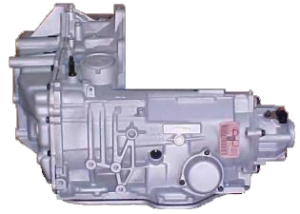
EARLY HYDRAULIC AUTOMATIC
3T40 / THM125C
Three-speed transverse automatic used in selected lower-output early W-Body combinations. It predates the overdrive four-speed architecture that became the platform norm.
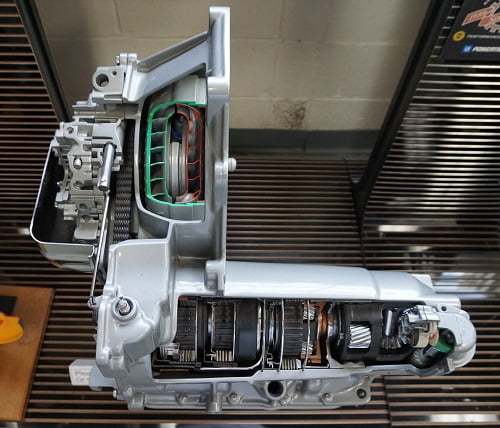
HYDRAULIC 4-SPEED
4T60 / 440-T4
Four-speed overdrive automatic that became a foundation of early W-Body drivetrains. Shift timing is primarily hydraulic, with a TV cable and torque-converter-clutch controls rather than full PCM-commanded shifting.
1989–1990 PERFORMANCE APPLICATION
4T60-HD
The heavy-duty hydraulic 4T60 associated with the ASC/McLaren Pontiac Turbo Grand Prix and turbocharged LG5 3.1L. Its application-specific hardware means an ordinary 4T60 should not automatically be treated as equivalent.
ELECTRONIC 4-SPEED
4T60-E
Electronic evolution of the 4T60 family. GM diagnostic documentation shows it remained in several W-car combinations even after the 4T65-E began appearing, so the changeover cannot be assigned to one universal model year.
CORE LATER W-BODY AUTOMATIC
4T65-E
The dominant later W-Body four-speed. In 1997 GM lists the W-car LQ1 and supercharged L67 with the 4T65-E while the L82 and naturally aspirated L36 still used the 4T60-E. By the early 2000s the 4T65-E had spread across the W-body engine range.
RPO MN7 • HEAVY DUTY
4T65E-HD
Heavy-duty 4T65-E configuration used with factory high-output W-Body powertrains, including supercharged 3800 combinations and the LS4 V8. Final drive, differential, converter and internal details are application dependent.
FACTORY 5-SPEED MANUAL
Getrag 282
Five-speed manual used in selected early first-generation W cars with the 2.8L and 3.1L V6. W-specific mounts, intermediate shaft, linkage and hydraulics matter when comparing it with Getrag 282 units from other GM platforms.
FACTORY 5-SPEED • LQ1
Getrag 284
Heavy-duty five-speed developed for the 3.4L LQ1 Twin Dual Cam W-Body performance cars. Contemporary W-platform documentation and owner records place factory manual availability primarily in the 1991–1993 era.
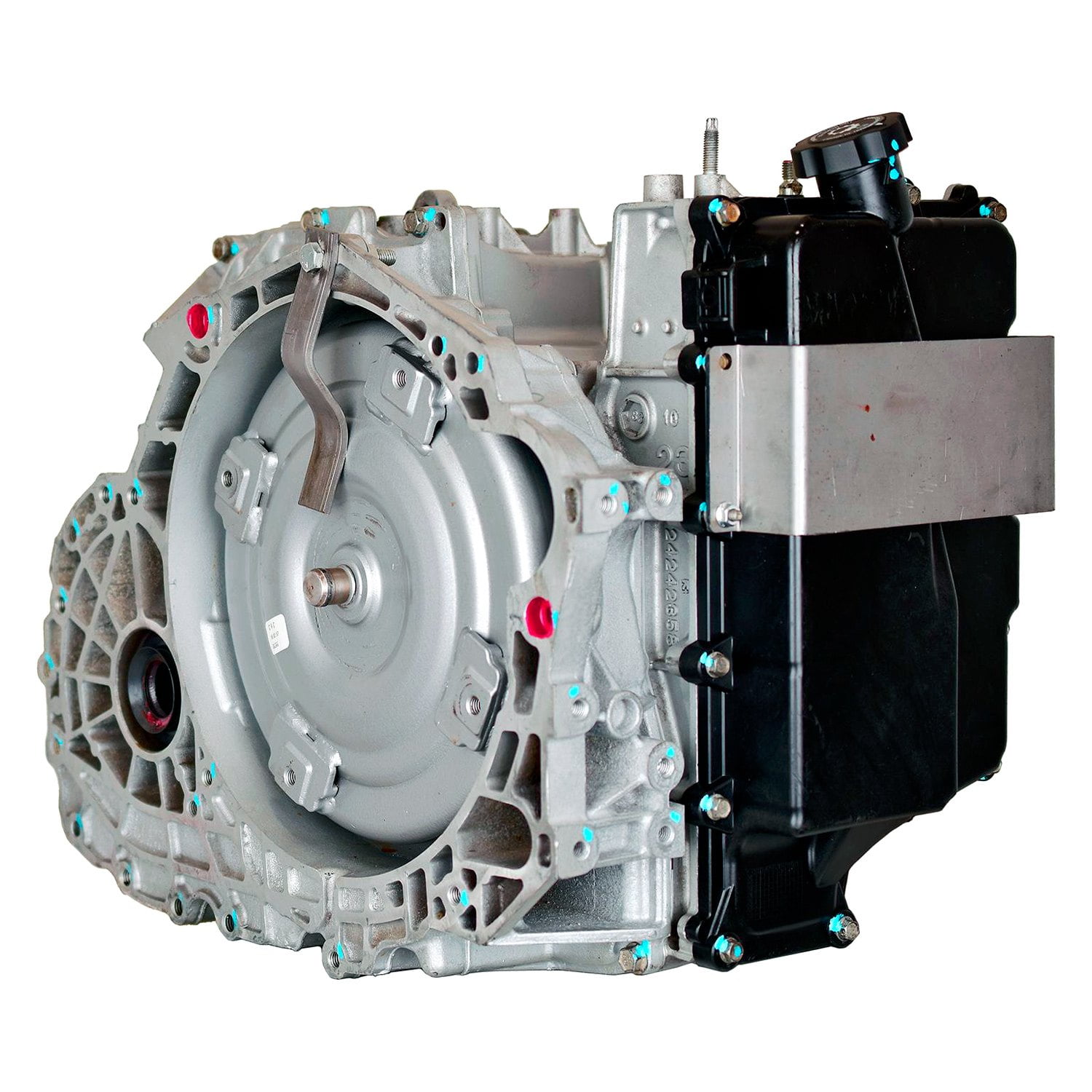
FINAL W-BODY AUTOMATIC
6T70
Six-speed electronic automatic paired with the 3.6L LFX in the final W-platform Impala era. Its architecture, control strategy and ratio spread are fundamentally different from the preceding 4T65-E family.
EVOLUTION
From Hydraulic Control to the Six-Speed Era
The W platform lasted long enough to cross several generations of GM transmission technology. The important point is that these changes overlapped rather than happening all at once.
W-Body Production Begins
First-generation W cars launch with GM transverse hydraulic automatics and limited manual-transmission availability. The four-speed 440-T4/4T60 becomes the key automatic architecture for the early platform.
Turbo Grand Prix Gets the 4T60-HD
The ASC/McLaren Turbo Grand Prix pairs its turbocharged LG5 3.1L with an application-specific heavy-duty 4T60 configuration.
Electronic Automatics and the Getrag 284
The W-Body enters a more electronic drivetrain era with the 4T60-E. The LQ1 performance cars also introduce the Getrag 284 five-speed, creating one of the rarest factory W-Body powertrain combinations.
4T65-E Appears Alongside the 4T60-E
GM’s 1997 diagnostic matrix lists W-car LQ1 and L67 applications with the 4T65-E, while W-car L82 and naturally aspirated L36 applications are still listed with the 4T60-E. The transition was engine- and application-specific.
4T65-E Becomes the W-Body Standard
GM diagnostic listings show the 4T65-E spreading across naturally aspirated and supercharged 3800 cars and later 3.1L, 3.4L and 3.5L W applications.
LS4 V8 Extends the Heavy-Duty 4-Speed Era
The transverse LS4 V8 uses a dedicated heavy-duty 4T65-E/MN7 configuration in W-Body performance models, further increasing the importance of application-specific identification.
LFX and 6T70 Close the W-Body Story
The 3.6L LFX-powered Impala adopts the 6T70 six-speed, replacing the long-running four-speed lineage for the final years of W-platform production.
APPLICATIONS BY ERA
How Transmission Choice Changed Across W-Body Models
These groups are a practical research guide, not an interchange chart. Always verify the exact year, engine and transmission tag before purchasing a replacement unit.
1988–1996 W Cars
Hydraulic 4T60 applications dominate early automatic cars, with selected 3T40 usage and rare Getrag 282 manuals. LQ1 performance cars move into 4T60-E/Getrag 284 territory during the early 1990s.
4T60-E and 4T65-E Overlap
GM’s own 1997 matrix is the clearest warning against using a single model-year rule: different W-car engines used different four-speed families in the same year.
4T65-E Becomes Dominant
Regal, Grand Prix, Impala, Monte Carlo, Intrigue and related later W cars relied heavily on the 4T65-E family, with HD variants used in higher-output applications.
2012–2016 Impala / Impala Limited
The 3.6L LFX and 6T70 mark the final major W-Body drivetrain revision and the only production six-speed automatic era on the platform.
IDENTIFICATION & INTERCHANGE
Do Not Buy a Transmission by Family Name Alone
A “4T65-E” listing is not enough. Two units from the same family can differ in gearing, differential, converter, case details, electrical hardware and calibration.
VIN + RPO Label
Start with the vehicle VIN and Service Parts Identification label. Transmission RPOs such as MN7 help identify the original configuration.
Transmission Model Code
Read the code/tag on the actual transmission. This is critical when comparing used units, internal parts, converters and valve bodies.
Match Engine + Year
Bellhousing pattern alone does not establish interchange. Engine torque, converter choice, electronics and calibration changed by application.
Check Final Drive
Chain sprockets, differential ratio and final-drive combinations can change overall gearing even when the case looks identical.
Check Electronics
Pressure-control systems, solenoids, wiring and internal electronic revisions changed through production. Connector similarity does not guarantee compatibility.
Verify Service Data
Before installation, compare the donor and original model codes using the correct model-year service information. This matters especially for later 4T65-E units.
RELATED WIKI
Continue Into the Drivetrain
Use the individual transmission pages for deeper specifications, then cross-reference the engine and vehicle pages before making interchange decisions.
TRANSMISSION4T60-HD Turbo Grand Prix
TRANSMISSION4T60-E
TRANSMISSION4T65-E
TRANSMISSION4T65E-HD / MN7
FACTORY MANUALGetrag 282
FACTORY MANUALGetrag 284
SWAP REFERENCEF40 / MR6 Six-Speed
TRANSMISSION6T70 Six-Speed Automatic
POWERTRAINW-Body Engine Wiki
VEHICLESW-Body Vehicle Directory
COMMUNITYTransmission & Swap Forums
SOURCES & TECHNICAL REFERENCES
Where the Application Data Comes From
Primary GM diagnostic matrices are used wherever possible because they directly pair engine, platform and transmission family for a specific model year. Community sources are used mainly for rare manual-transmission and swap details where factory material is difficult to surface online.
GENERAL MOTORS2000 Transmission Diagnostic ParametersShows 4T65-E use across naturally aspirated and supercharged W-body 3800 applications.
GENERAL MOTORS2002 Transmission Diagnostic ParametersDocuments broader 4T65-E use across W-body engine families.
GENERAL MOTORS2006 Transmission Diagnostic ParametersUseful for mid-2000s 4T65-E and performance application verification.
GENERAL MOTORS2012 Transmission Diagnostic ParametersService-data entry point for the six-speed era.
GENERAL MOTORS HERITAGEVehicle Information KitsFactory model-year literature and historical vehicle specifications.
W-BODY COMMUNITY ARCHIVEW-Body Getrag 282 Technical DiscussionDocuments W-specific case, mounting and drivetrain differences.
W-BODYTECH FORUMSF40 / MR6 Swap Parts GuideDocumented swap reference. The F40 is not presented as a factory W-Body transmission.
W-BODY COMMUNITY KNOWLEDGE
Trying to Identify a Transmission?
Bring the year, model, engine RPO, transmission model code and symptoms. Those details make interchange and diagnosis far more reliable than identifying the unit only as a “4T65-E.”