
TRANSMISSION FAMILY • GM HYDRA-MATIC
GM 4T65E-HD
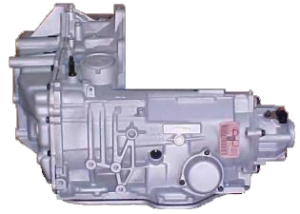
The 4T65E-HD is the heavy-duty MN7 version of GM’s electronically controlled 4T65-E transverse 4-speed automatic transaxle. In W-Body applications it was paired with the L67 and L32 supercharged 3800 V6 and later the LS4 5.3L V8, making it the factory transmission behind many of the platform’s highest-output models.
4-Speed Automatic
Transverse FWD
3800 SC + LS4
AT A GLANCE
What Defines the 4T65E-HD?
The HD is not simply a standard 4T65-E with a different calibration. RPO MN7 identifies the heavy-duty version, with hardware and final-drive arrangements intended for higher-output applications. Model year and exact transmission ID still matter because the 4T65-E family changed during production.
HEAVY-DUTY VERSION
How the MN7 Differs From a Standard 4T65-E
The biggest practical mistake is assuming any 4T65-E is a direct replacement for an MN7. The heavy-duty unit uses an HD driveline configuration and application-specific differential, converter, axle and calibration details.
RPO MN7
Heavy-Duty Configuration
GM service bulletins identify MN7 specifically as “4T65-E, Heavy Duty.” It was selected for high-output front-drive applications rather than the ordinary naturally aspirated W-Body combinations that commonly used M15.
DIFFERENTIAL
Larger HD Assembly
The HD uses a larger differential assembly than the standard 4T65-E. This affects the transmission case/output area and is one reason the passenger-side axle arrangement differs between HD and non-HD installations.
AXLE INTERFACE
Passenger Side Is Different
Because of the larger HD differential package, the passenger-side CV axle/intermediate arrangement is not automatically interchangeable with a standard 4T65-E application. Match the axle hardware to the transmission and vehicle.
TORQUE CONVERTER
Application-Specific Converter
Converter code and stall characteristics vary by model code and engine. A supercharged 3800 MN7 and an LS4 MN7 should not be assumed to use the same converter simply because both are 4T65E-HD units.
CHAIN & FINAL DRIVE
Overall Ratio Can Differ
The differential ratio alone does not tell the full story. A 3.29 differential paired with 37/33 sprockets produces an effective overall final drive of about 2.93:1, while 35/35 sprockets retain 3.29:1.
ELECTRONICS
Model-Year Changes Matter
Internal electrical and hydraulic revisions occurred during the production run. A transmission that physically bolts in may still require the correct PCM calibration, wiring strategy, valve body and internal-electronics generation.
GEARING
4T65-E Internal Gear Ratios
The basic four forward gear ratios are shared across the 4T65-E family. Vehicle behavior changes substantially with the chain sprocket and final-drive combination.
| Range | Ratio | Function |
|---|---|---|
| 1st | 2.921:1 | Launch / maximum torque multiplication |
| 2nd | 1.568:1 | Intermediate acceleration |
| 3rd | 1.000:1 | Direct drive |
| 4th | 0.705:1 | Overdrive |
| Reverse | 2.385:1 | Reverse range |
HD FINAL-DRIVE EXAMPLES
Why “3.29 Differential” Does Not Always Mean 3.29 Overall
Approx. 2.93 Overall
Common MN7 arrangement using a 3.29 differential with a 37-tooth drive and 33-tooth driven sprocket set.
2005 GM identification data shows this combination in multiple supercharged and LS4 HD units.
3.29 Overall
A 1.000:1 chain ratio leaves the 3.29 differential as a 3.29 overall final-drive ratio.
Used in certain performance applications including 2004–2005 Grand Prix Comp G / TAPShift configurations.
Ratio Must Match the Tune
The PCM uses vehicle speed, commanded gear and expected turbine/output behavior to control shifts and diagnostics.
If the overall ratio changes, the calibration should be updated rather than treating gearing as a purely mechanical swap.
EVOLUTION
Important 4T65-E Production Changes
The transmission evolved during its long production run. These changes are important when sourcing used units, valve bodies, cases, wiring and internal parts.
4T65-E Replaces the 4T60-E
The 4T65-E enters production as the next development of GM’s electronically controlled transverse 4-speed family. The HD version becomes the performance transmission behind supercharged 3800 applications.
Valve-Body Updates
Mid-production units received hydraulic-control revisions. For diagnosis and rebuild work, model code and production year are more reliable than assuming every 4T65-E valve body is identical.
Internal and Electrical Revisions
The 2003-era family received important internal revisions, including changes to electronics and several rotating/holding components. Earlier and later units should not be treated as plug-and-play replacements without verifying compatibility.
Case and Cooler-Fitting Change
GM service information states that beginning with Julian date 4019, January 19, 2004, the transaxle case and cooler fittings changed. The new and old case/fitting arrangements are not directly interchangeable.
TAPShift / 3.29 Performance Combination
Grand Prix Comp G applications introduced a 35/35 chain arrangement with the 3.29 differential, producing a true 3.29 overall ratio and integrating TAPShift operation into the vehicle/transmission calibration.
LS4 V8 Joins the MN7 Family
The Pontiac Grand Prix GXP adds an LS4-specific MN7 configuration. Later Impala SS, Monte Carlo SS and LaCrosse Super applications continue the LS4/4T65E-HD pairing.
THE W-BODY CONNECTION
The Factory Performance 4-Speed of the Later W Platform
Within W-Body history, MN7 is most closely associated with supercharged 3800 and LS4 performance models. Exact model code, axle ratio and control strategy changed by year.
W-BODY PERFORMANCE DRIVETRAIN
GTP, Regal GS, Supercharged SS and LS4 V8
The 4T65E-HD connected some of the strongest factory W-Body engines to the front wheels, from the L67 Regal GS and Grand Prix GTP to the L32 Comp G and LS4-powered GXP, Impala SS, Monte Carlo SS and LaCrosse Super.
Pontiac Grand Prix GTP
The Series II supercharged 3800 Grand Prix used the MN7 heavy-duty transaxle as its factory performance transmission.
Buick Regal GS
The supercharged Regal GS paired the L67 with the 4T65E-HD, making it one of the core W-Body MN7 applications.
Impala SS / Monte Carlo SS Supercharged
The final supercharged Series II Chevrolet W cars used MN7 behind the L67 before Chevrolet moved its SS models to the LS4 V8.
Grand Prix GTP / Comp G
Series III supercharged Grand Prix applications used the HD transmission, with certain Comp G/TAPShift configurations using the 3.29 overall final-drive setup.
Pontiac Grand Prix GXP
The LS4-powered GXP used an LS4-specific MN7 configuration with TAPShift. Do not assume a supercharged 3800 MN7 is a direct replacement.
Impala SS / Monte Carlo SS / LaCrosse Super
Late LS4 W-Body applications continued to use heavy-duty 4T65-E variants, but donor-specific hardware and calibration should always be verified.
SERVICE & DIAGNOSTIC NOTES
Common 4T65-E Problems and What to Check
The 4T65-E has several well-documented hydraulic and wear-related failure patterns. Symptoms should be diagnosed with scan data, line-pressure information and fluid condition rather than automatically condemning the entire transmission.
Areas That Deserve Attention
Pressure-control solenoid / harsh shifts: unstable or incorrect line-pressure control can produce harsh shifts, slipping or adaptive-pressure complaints. GM service information includes valve-body procedures for MN7, M15 and M76 units.
TCC apply problems: DTC P0741 and torque-converter-clutch slip can result from converter, valve-body, hydraulic or internal wear. Do not replace only the converter without checking the hydraulic cause.
PCS / valve-body wear: worn valve bores and control-valve issues can create erratic pressure and shift quality. Proper diagnosis may require commanded-pressure testing and scan-tool comparison.
4th gear / input components: loss of individual ranges or ratio errors can indicate hard-part failure rather than a solenoid-only problem.
Differential and axle fitment: HD and standard units differ around the differential/output arrangement. Swapping cases or axles without checking the exact transmission can create fitment problems.
Heat: higher-output W cars generate more transmission heat. A clean radiator/transmission cooler circuit, correct fluid level and a healthy converter clutch are important for service life.
FLUID & SERVICE
Fluid Specification and Capacity
Fluid recommendation depends on the service date and GM supersession information. Older manuals specify DEXRON-III, while GM later introduced DEXRON-VI as the service replacement for many earlier Hydra-Matic applications.
DEXRON-III
Period GM documentation for early/mid-production 4T65-E units lists DEXRON-III.
Use current GM service guidance when selecting replacement fluid today.
About 7.4 qt
GM’s 2004 W-car 4T65-E specification lists approximately 7.0 L / 7.4 qt for a bottom-pan removal service.
Actual refill amount depends on drain time, converter loss and cooler lines. Set final level using the proper hot-level procedure.
About 10.0 qt
GM lists approximately 9.5 L / 10.0 qt after complete overhaul for the 4T65-E family.
Do not pour the published capacity in blindly. Verify fluid level at operating temperature.
RELATED W-BODYTECH PAGES
Continue Into the Engine and Drivetrain
The HD transaxle cannot be separated from the engine, axles, calibration and vehicle it was designed around. Use these pages to verify the rest of the combination.
Buick 3800 V6
L67 and L32 supercharged 3800 variants were major factory users of the MN7 4T65E-HD.
LS4 5300 V8
The transverse LS4 required its own HD 4T65-E combination and application-specific calibration.
3800 Stage 1 Upgrades
Transmission condition should be part of every supercharged 3800 performance plan, especially before pulley and tuning changes.
Find Your W-Body
Use the model-year vehicle page to verify which engine and transmission combination your car originally used.
TECHNICAL REFERENCES
Sources & Further Reading
GM specifications, service information and transmission-identification material used to verify gearing, RPO codes, production revisions and W-Body HD combinations.
For replacement or rebuild work, use the complete transmission model code and the applicable GM service information for the exact vehicle. RPO MN7 identifies the HD family, but it does not make every MN7 unit from every year directly interchangeable.
W-BODY COMMUNITY KNOWLEDGE
Working on a 4T65E-HD?
Continue into transmission diagnosis, swaps, performance combinations and real W-Body owner experience in the W-BodyTech community.