TRANSMISSION FAMILY • GM HYDRA-MATIC The 4T60-HD is the heavy-duty version of GM’s hydraulic 4T60 / THM 440-T4 transverse four-speed automatic. In W-Body production it is most closely associated with one specific car: the 1989–1990 Pontiac Turbo Grand Prix and its turbocharged LG5 3.1L V6. AT A GLANCE The 4T60-HD belongs to the same hydraulic transmission family as the standard 4T60, but Pontiac specified a stronger final-drive package and application-specific calibration for the turbocharged Grand Prix. It should be treated as a rare, TGP-specific drivetrain component rather than a generic 4T60 replacement. HEAVY-DUTY CONFIGURATION Published historical references consistently identify the TGP transmission as an HD version of the 4T60 with upgraded final-drive hardware and a calibration tailored to the turbocharged engine. Some individual internal details vary by source, so the safest approach is to identify the original TGP transmission by its application and transmission code rather than assuming a universal “HD parts list.” FINAL DRIVE The most consistently documented HD change is stronger final-drive hardware. This matters because the differential and final-drive assembly see the torque after it has already been multiplied through first gear. HYDRAULIC CALIBRATION Enthusiast teardown and driving reports consistently describe firmer, more progressive shift behavior than a regular naturally aspirated 4T60, matching the needs of an engine whose torque rises rapidly under boost. TORQUE CONVERTER The converter should be matched to the TGP transmission/application. Stall and clutch behavior are part of the drivetrain calibration and should not be replaced casually with a generic 4T60 converter. TV SYSTEM As with other 4T60 units, the TV cable is critical to line-pressure and shift behavior. Incorrect adjustment is especially risky in a boosted application. VACUUM MODULATOR The 4T60 family uses a vacuum modulator alongside the TV system. The turbo application requires the complete vacuum/boost-control arrangement to be correct for predictable shift feel. RARE APPLICATION Because the HD transmission was tied to a short production run, original cores and application-specific components are significantly harder to replace than ordinary 4T60 parts. GEARING The HD transmission remains part of the 440-T4 / 4T60 family and uses the same basic four-speed planetary ratios. The “HD” designation concerns the heavy-duty application and driveline hardware, not a completely different forward gearset. WHY THE FINAL DRIVE MATTERS First gear multiplies engine torque by almost three before it reaches the chain drive and differential. On a turbocharged front-drive car, that places enormous load on the final-drive assembly. This is why the HD differential/final-drive hardware is more important than simply comparing the transmission’s four forward ratios. 1ST GEAR Turbo engine torque is multiplied sharply during launch, creating high load at the differential and axle outputs. BOOST DELIVERY The Garrett-turbo LG5 can build substantially more torque after launch than a naturally aspirated 3.1L, so pressure and clutch capacity matter throughout the shift. REPLACEMENT A regular 4T60 may physically fit but should not be assumed to duplicate the HD final drive or factory TGP calibration. THE W-BODY APPLICATION The 4T60-HD is inseparable from the Turbo Grand Prix story. ASC and McLaren Engine helped develop the turbocharged drivetrain package, and Pontiac paired the unique LG5 turbo V6 with a transmission calibrated specifically for the extra torque. The TGP’s 3.1L OHV V6 used a Garrett T25 turbocharger and intercooler. Contemporary road-test and historical sources rate it at 205 hp, with published torque figures around 220–225 lb-ft. The turbo coupe is the core production application for the HD transmission. The combination was sold for only two model years, making complete original drivetrains uncommon today. The turbocharged V6 was also offered in the Grand Prix STE sedan for 1990. Transmission identification should still be verified from the original drivetrain rather than assumed from exterior trim alone. The limited Turbo Grand Prix program ended after 1990. Pontiac moved to the naturally aspirated 3.4L LQ1 DOHC engine and newer transmission choices for the performance Grand Prix lineup. EVOLUTION The HD sits at a very specific point between the early hydraulic 440-T4 and the electronically controlled four-speed transmissions that followed. GM introduces the transverse four-speed overdrive architecture that later becomes known as the 4T60. Standard 440-T4 units appear in first-generation W cars behind naturally aspirated V6 engines. The turbocharged Grand Prix arrives with a heavy-duty 440-T4 / 4T60 configuration intended to survive the LG5’s much higher torque output. The Turbo Grand Prix continues for 1990, including the rare turbo STE sedan. The transmission remains part of the special turbo drivetrain package. The Turbo Grand Prix program ends and W-Body performance development shifts toward the LQ1 and electronically controlled 4T60-E. SERVICE & OWNERSHIP NOTES Thirty-five-plus years after production, condition and rebuild quality matter more than the fact that a core was originally “HD.” Any surviving TGP transmission should be evaluated as a complete vintage drivetrain component. Preserve the original case and identification: before disassembly, photograph the transmission tag, broadcast code, converter markings and any application-specific hardware. TV-cable setup: incorrect adjustment can lower pressure and allow clutch slip. This is especially damaging in a boosted application. Vacuum / boost plumbing: the modulator system must receive the correct pressure signal. Missing or incorrectly routed hoses can alter shift feel and pressure behavior. Differential condition: inspect spider gears, differential bearings, case area and final-drive hardware carefully. These parts see very high torque during boosted launches. 4th clutch and 2nd clutch: the underlying 4T60 family has documented clutch durability updates. A modern rebuild should use the correct later-service improvements where appropriate. Torque converter: do not install a random replacement based only on spline fitment. Converter stall and TCC characteristics affect the complete turbo drivetrain. Cooling: heat is a major automatic-transmission killer. The cooler circuit, radiator heat exchanger and fluid flow should be checked whenever the transmission is rebuilt. RELATED W-BODYTECH PAGES The 4T60-HD makes the most sense when researched together with the first-generation Grand Prix and GM’s 60-degree V6 family. Learn how the standard hydraulic 4T60 operates, including its TV cable, governor, modulator, gear ratios and identification. The turbo LG5 is part of GM’s long-running 60-degree V6 family and shares its basic architecture with naturally aspirated 2.8L and 3.1L engines. Explore the first-generation W-Body Grand Prix range, including the Turbo Grand Prix era. Compare the 4T60-HD with the other automatic and manual transaxles used across the W platform. A dedicated owner and enthusiast group focused on the ASC/McLaren Turbo Grand Prix and related restoration, drivetrain and historical discussion. A public Facebook page centered on the ASC/McLaren Grand Prix, useful for model history, community posts and Turbo Grand Prix enthusiast content. TECHNICAL & HISTORICAL REFERENCES Because detailed factory documentation specific to the HD variant is harder to find than standard 4T60 information, this page separates well-established application facts from community observations about calibration and internal differences. Some enthusiast sources describe additional TGP-specific valve-body, converter and calibration differences beyond the upgraded final drive. Those details are useful for rebuild research, but exact interchange decisions should be based on the original transmission identification and verified parts rather than assuming every reported HD internal difference applies to every unit. W-BODY COMMUNITY KNOWLEDGE Bring the transmission broadcast code, engine information and photos of the original drivetrain. With a rare TGP-specific transmission, documenting exactly what you have is worth doing before any teardown or replacement. For Turbo Grand Prix-specific history and owner discussion, the ASC/McLaren Grand Prix Facebook group and public page are also linked above.GM 4T60-HD
Hydraulic 4-Speed
Heavy-Duty Final Drive
LG5 Turbo 3.1L
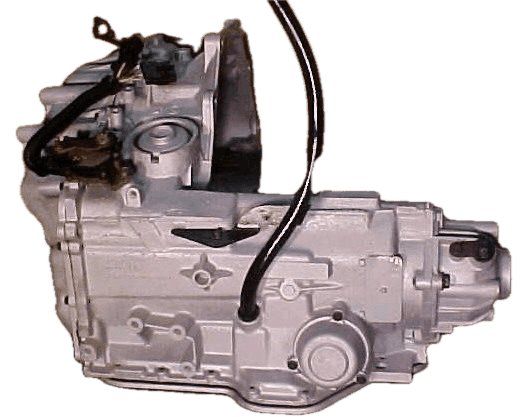
The Factory Heavy-Duty 4T60 for the Turbo Grand Prix
What Makes the 4T60-HD Different?
Upgraded Hardware
Boost-Oriented Shift Feel
Application-Specific
Throttle Position Matters
Shift Feel Under Boost
Preserve the Original Unit
4T60-HD Internal Gear Ratios
Range
Ratio
Function
1st
2.921:1
Launch and maximum torque multiplication
2nd
1.568:1
Intermediate acceleration
3rd
1.000:1
Direct drive
4th
0.705:1
Overdrive
Reverse
2.385:1
Reverse range
The Differential Is the Critical HD Area
2.921:1 Multiplication
Torque Rises Quickly
Do Not Substitute Blindly
1989–1990 Pontiac Turbo Grand Prix
Turbocharged 3.1L V6
Turbo Grand Prix Coupe
Turbo STE Sedan
LQ1 Replaces the Turbo Program
Where the 4T60-HD Fits in GM’s Transmission Timeline
440-T4 Family Begins
W-Body Launch
Turbo Grand Prix / HD Application
Second and Final TGP Model Year
Electronic Four-Speed Era
Preserving and Rebuilding a 4T60-HD
What to Check
Continue Into the TGP Drivetrain
GM 4T60 / 440-T4
GM 60-Degree V6
1988–1996 Pontiac Grand Prix
W-Body Transmissions
ASC/McLaren Grand Prix Facebook Group
ASC/McLaren Grand Prix Facebook Page
Sources & Further Reading
Restoring a Turbo Grand Prix?