
The Complete History of GM’s High Feature V6
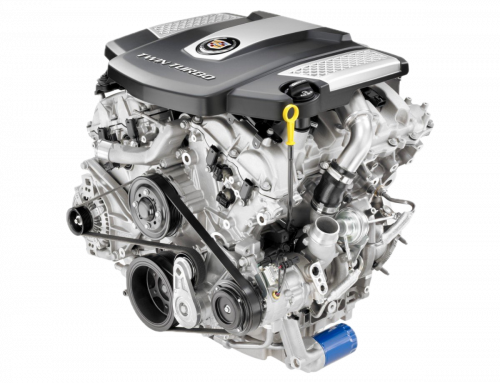
From the original 3.6-liter Alloytec and LY7 to direct injection, the W-body LFX, Cadillac’s twin-turbo LF3 and LF4, and the later LGX generation, GM’s High Feature V6 became far more than simply “the 3.6.”
2.8L • 3.0L • 3.2L • 3.6L
Port injection • SIDI • turbo
W-body: LY7 + LFX

General Motors’ High Feature V6 is best known in North America for the 3.6-liter engines found in Cadillacs, Camaros, crossovers and late W-body cars. But the HFV6 was never a single engine. It was a global family that evolved through several generations, displacements, fuel systems and induction strategies.
The family began production in the early 2000s with the 3.6-liter LY7, known as Alloytec in Australia. GM then expanded the architecture into naturally aspirated and turbocharged 2.8-liter engines, a 3.2-liter international version, direct-injected 3.0- and 3.6-liter engines, bi-fuel applications and a pair of twin-turbo performance branches. The latest descendant of the original performance line is still on sale in the 2026 Cadillac CT4-V Blackwing, where the 3.6-liter twin-turbo V6 produces 472 horsepower and 445 lb-ft.
For W-body enthusiasts, the story is especially relevant. The first-generation Buick LaCrosse CXS brought the LY7 to the W platform, while the 2012-2013 Chevrolet Impala and 2014-2016 Impala Limited finished the platform’s production run with the LFX.
A global V6 program, not just another GM 3.6
GM developed the High Feature V6 as a modern global engine family that could serve multiple brands and markets while sharing a common basic architecture. Holden played a major role in engineering and manufacturing, and its Port Melbourne engine operation became one of the best-known production homes for the family. In Australia, the first 3.6-liter engines were marketed under the Alloytec name.
The core formula was modern for a mass-market GM V6 of the period: a 60-degree aluminum block, aluminum DOHC cylinder heads, four valves per cylinder, chain-driven camshafts, electronic throttle control and variable cam timing. The exact cam-phasing strategy, intake system, compression ratio, fuel system and internal parts changed considerably as the family evolved.
Important chronology correction: the 2.8-liter LP1 was not the first production High Feature V6. The 3.6-liter LY7/Alloytec arrived first in the 2004 era. The naturally aspirated 2.8-liter CTS engine followed for the 2005 model year.


What stayed common, and what did not
“HFV6” is best understood as an engine family designation, not a promise that every RPO shares the same block, heads or internals. Early LY7 and later LFX engines are related, but the LFX received substantial casting, cylinder-head, intake and exhaust changes. The later LGX/LGZ generation was redesigned again. Turbo engines such as the LF3 and LF4 also use extensive application-specific hardware.
| RPO / family | Displacement | Induction / fuel | Representative output | Why it matters |
|---|---|---|---|---|
| LP1 | 2.8L / 2792 cc | NA, port injection | 210 hp / 194 lb-ft in early CTS | Naturally aspirated 2.8L branch |
| LP9 | 2.8L / 2792 cc | Single turbo, port injection | Roughly 230-280 hp by application | Saab / Opel turbo branch |
| LAU | 2.8L / 2792 cc | Single turbo, port injection | About 300 hp | Later Cadillac / Saab 2.8T |
| 3.2 Alloytec | 3.2L / 3195 cc | NA, port injection | 169 kW / 227 hp, 297 Nm / 219 lb-ft | International Holden/Opel branch |
| LY7 | 3.6L / 3564 cc | NA, port injection | About 240-275 hp | Original production 3.6L HFV6 |
| LLT | 3.6L / 3564 cc | NA, direct injection | Up to 312 hp | Major SIDI transition |
| LF1 / LFW | 3.0L / 2994 cc | NA, direct injection | About 255-276 hp | Shorter-stroke DI branch |
| LFX | 3.6L / 3564 cc | NA, direct injection | 300-323 hp typical | Major third-generation redesign |
| LFR | 3.6L / 3564 cc | NA, gasoline/CNG port injection | 258 hp gas / 232 hp CNG | Bi-fuel Impala derivative |
| LF3 | 3.6L / 3564 cc | Twin turbo, direct injection | 410-420 hp | CTS/XTS Vsport performance engine |
| LF4 | 3.6L / 3564 cc | Twin turbo, direct injection | 464-472 hp | ATS-V and CT4-V Blackwing |
| LGW / LGY | 3.0L / 2998 cc | Twin turbo, direct injection | 335-404 hp | New-generation Cadillac 3.0TT branch |
| LGX | 3.6L / 3649 cc | NA, direct injection | About 308-335 hp | Fourth-generation naturally aspirated 3.6 |
| LGZ | 3.6L / 3649 cc | NA, direct injection | 308 hp / 275 lb-ft | Midsize truck version |
| LFY | 3.6L | NA, direct injection | 310 hp / 266 lb-ft | Late LFX-derived crossover version |
Outputs are application-specific. GM regularly changed calibration and, in some cases, hardware while retaining the same RPO family designation.
The smaller branches: LP1, LP9, LAU and the 3.2 Alloytec
LP1: the naturally aspirated 2.8
The LP1 displaced 2,792 cc with an 89.0 mm bore and 74.8 mm stroke. In the 2005 Cadillac CTS it was rated at 210 horsepower and 194 lb-ft of torque. It used sequential multi-port injection, a 10.0:1 compression ratio and the same basic 60-degree DOHC concept as the larger HFV6 engines.
LP9: Saab and Opel take the 2.8 turbo
The LP9 kept the 89.0 x 74.8 mm dimensions but reduced compression to roughly 9.5:1 for turbocharging. This branch is closely associated with Saab and Opel and appeared under additional designations such as B284 and A28NET. Depending on vehicle and calibration, output ranged from the low-230-hp area into the 250s, with higher-output Saab applications reaching approximately 280 hp.
This matters because forced induction was not an afterthought added only at the end of the HFV6 story. GM and Saab were developing turbocharged versions of the architecture relatively early in the family’s life.
LAU: the later 2.8T
The LAU was a later 2.8-liter turbo development used in vehicles including the Cadillac SRX and Saab 9-4X. Output was around 300 horsepower with approximately 295 lb-ft of torque, demonstrating how far the small-displacement branch had moved beyond the naturally aspirated LP1.
The 3.2-liter international engine
Holden also produced a 3.2-liter High Feature V6 for international applications. A period Holden Captiva specification lists 3,195 cc, 10.3:1 compression, 169 kW at 6,600 rpm and 297 Nm at 3,200 rpm, equivalent to roughly 227 hp and 219 lb-ft. It used DOHC four-valve heads, sequential injection, continuously variable intake and exhaust cam phasing and a variable intake manifold.


LY7: the 3.6-liter engine that established the family
The LY7 is the engine that made the High Feature V6 a major global GM powerplant. It displaced 3,564 cc using a 94.0 mm bore and 85.6 mm stroke, with an aluminum block and heads, DOHC 24-valve valvetrain and port fuel injection.
Depending on application, the LY7 was calibrated from roughly 240 horsepower into the mid-270-hp range. The wide spread reflects more than software alone. GM and Holden used different intake systems, cam-phasing strategies and application-specific hardware across passenger cars and crossovers.
Core LY7 dimensions
Bore94.0 mm
Stroke85.6 mm
CompressionAbout 10.2:1
FuelSequential port injection
ValvetrainDOHC, 24 valves, VVT
Representative applications
Cadillac CTS/SRX/STS, Buick LaCrosse CXS, Holden Commodore, Pontiac G8, Pontiac G6, Chevrolet Malibu, GMC Acadia and several related GM crossovers and international models.
The W-body Buick LaCrosse CXS
The LY7 has a direct W-body connection. The 2005-2008 Buick LaCrosse CXS used the 3.6-liter engine in transverse form with a four-speed automatic. The CXS was rated at 240 horsepower and 225 lb-ft, giving Buick a modern DOHC alternative to the 3800-powered CX and CXL.
The 2008 CXS was limited availability as Buick added the LS4-powered LaCrosse Super. The 3.6-liter CXS should therefore not be listed as a 2009 application.
Why the Australian market matters
In Australia the engine’s Alloytec identity became much more prominent than the RPO code itself. Holden sold multiple versions and the engine developed an aftermarket for intake, exhaust, camshaft and tuning work. That ecosystem is useful evidence that the naturally aspirated HFV6 was not necessarily at its airflow limit in factory form.

Mace Engineering, for example, currently lists custom camshafts for LY7/LLT/LFX-family engines and reports that its 210/210 cam combinations have produced gains around 30 rear-wheel kilowatts in suitable applications. Those are vendor-reported aftermarket results, not a factory rating, and actual results depend heavily on the vehicle, supporting modifications, fuel and calibration.
LLT and the move to direct injection
The LLT marked one of the most important technological changes in the High Feature V6 family. It retained the 3,564 cc displacement and 94.0 x 85.6 mm dimensions but added GM’s spark-ignition direct injection system and raised compression to roughly 11.3:1.
In the second-generation Cadillac CTS, the direct-injected 3.6 was rated at 304 horsepower and 273 lb-ft. Camaro applications eventually reached 312 horsepower. The combination of direct injection, four-cam phasing and high compression allowed GM to cross the 300-hp threshold without forced induction.

The 3.0-liter LF1 and LFW
GM also created a shorter-stroke 3.0-liter direct-injected branch. The LF1 displaced 2,994 cc with an 89.0 mm bore and 80.3 mm stroke and was used in vehicles such as the 2010 Buick LaCrosse, Cadillac CTS and Cadillac SRX. Output varied by application, generally from the mid-250-hp range to about 270 hp. The LFW added flex-fuel capability and appeared in vehicles including the Chevrolet Equinox, GMC Terrain and Holden Commodore.
LCS: a specialized hybrid-oriented derivative
GM service documentation also identifies the LCS RPO in 3.6-liter Saturn Vue hybrid material. It was a specialized and uncommon branch rather than a major volume member of the family. For a history of the HFV6, it is worth noting, but it should not be given the same significance as the LY7, LLT or LFX.
LFX: much more than a revised LLT
For 2012, GM introduced the LFX, the third-generation naturally aspirated 3.6-liter High Feature V6. It kept the familiar 94.0 mm bore, 85.6 mm stroke and 3,564 cc displacement, but the surrounding engine changed substantially.
The LFX used revised cylinder heads with integrated exhaust manifolds, larger intake valves, longer-duration intake camshafts, improved intake ports, a composite intake manifold, updated fuel-system hardware and stronger, lighter powdered-metal connecting rods. GM also revised the front cover and block details. Compression increased to approximately 11.5:1, and many applications gained E85 capability.
Why the integrated exhaust manifold mattered: moving the exhaust manifold into the cylinder-head casting reduced part count and mass, improved warm-up behavior and made packaging easier. It is one of the easiest visual and architectural ways to distinguish the LFX era from the LLT.


Camaro output
The 2012 Camaro LFX was rated at 323 horsepower at 6,800 rpm and 278 lb-ft at 4,800 rpm. In that application, GM also cut roughly 20 pounds compared with the outgoing LLT package.
Application-specific ratings matter
The same LFX RPO did not mean identical output in every car. Cadillac ATS and CTS applications were rated around 318-321 hp, the Camaro at 323 hp, and several front-drive sedan and crossover applications around 300-308 hp. When documenting an LFX, the vehicle and model year matter as much as the RPO.
Aftermarket potential without mythology
The LFX has a legitimate naturally aspirated aftermarket, particularly in Australia. Camshafts, exhaust changes, intake work and calibration can produce meaningful gains. Mace Engineering reports approximately 30 rear-wheel-kilowatt gains from some of its naturally aspirated camshaft combinations when paired with supporting intake, exhaust and dyno tuning.
That is stronger evidence than simply claiming every LFX can make a particular wheel-horsepower number. Chassis dynos, correction factors, transmissions and supporting modifications vary too much for a single internet dyno figure to serve as a universal benchmark.
The High Feature V6 in W-body history
Only a few HFV6 applications were actually W-bodies, but they bookend an important part of the platform’s final decade.
W-body HFV6 applications
- 2005-2008 Buick LaCrosse CXS: LY7 3.6L, 240 hp / 225 lb-ft.
- 2012-2013 Chevrolet Impala: LFX 3.6L, 300 hp / 262 lb-ft.
- 2014-2016 Chevrolet Impala Limited: LFX 3.6L, 300 hp / 262 lb-ft.
The 2012 Impala transformation
The 2012 model year gave the long-running W-body Impala one of its most significant late-life mechanical upgrades. The previous 3.5- and 3.9-liter pushrod V6 choices were replaced by the 3.6-liter LFX and a six-speed automatic. Output jumped to 300 horsepower and 262 lb-ft.

Impala versus Impala Limited
This is where many application lists become misleading. The redesigned 2014 Chevrolet Impala moved to the Epsilon II platform and used its own LFX calibration, commonly listed at 305 hp and 264 lb-ft. At the same time, GM kept the old W-body in production for fleet customers as the Impala Limited. The 2014-2016 Impala Limited retained the W platform and the 300-hp / 262-lb-ft LFX combination.
Do not combine the two 2014 Impalas in specifications. A 2014 Impala and a 2014 Impala Limited are different cars on different platforms. The W-body Limited is the one that belongs in W-BodyTech’s platform history.
The LFR is not a W-body engine
The 3.6-liter LFR gasoline/CNG engine was used in the later full-size Impala Bi-Fuel, but that car was based on the newer Impala, not the W-body Impala Limited. Idaho National Laboratory testing lists the LFR at 258 hp and 244 lb-ft on gasoline and 232 hp and 218 lb-ft on CNG. Unlike the normal direct-injected LFX, the LFR used port injection for its dual-fuel system.
Cars often mistaken for W-bodies
The Pontiac G6, Pontiac G8 and second-generation Buick LaCrosse also used High Feature V6 engines, but they are not W-bodies. The G6 was Epsilon-based, the G8 was Zeta-based, and the 2010-and-newer LaCrosse moved to Epsilon II.
LF3 and LF4: the HFV6 becomes a serious performance engine
LF3: 420 horsepower in the CTS Vsport
The 3.6-liter LF3 arrived for the 2014 Cadillac CTS Vsport and XTS Vsport. It was based on the LFX architecture but used an extensively redesigned block, heads, pistons, rods, fuel system and induction package to support twin turbochargers.
In the rear-wheel-drive CTS Vsport, the LF3 was SAE-rated at 420 horsepower and 430 lb-ft. The transverse XTS Vsport used a different calibration, rated at 410 horsepower and 369 lb-ft. This is an important correction to application lists that give the XTS a 404-hp figure. The 404-hp rating belongs to the later 3.0-liter LGW in the CT6.
GM used two relatively small turbochargers to improve response, along with integrated air-to-water charge cooling and a high-pressure direct-injection system.
LF4: ATS-V to CT4-V Blackwing
The LF4 pushed the concept further for the Cadillac ATS-V. The 3.6-liter twin-turbo V6 used a forged steel crankshaft, titanium connecting rods in the ATS-V application, high-flow fueling, revised charge cooling and low-inertia titanium-aluminide turbine wheels. The ATS-V was rated at 464 horsepower and 445 lb-ft.

The LF4 did not end with the ATS-V. Cadillac carried the 3.6-liter twin-turbo V6 into the CT4-V Blackwing with a 472-hp calibration. As of the 2026 model year, Cadillac still lists the CT4-V Blackwing at 472 horsepower and 445 lb-ft with a six-speed manual or available 10-speed automatic.
That makes the HFV6 story a current one. More than two decades after the first 3.6-liter production engines, a direct descendant of the family still powers one of Cadillac’s highest-performance sedans.
The fourth-generation engines: LGX, LGZ, LGW and LGY
GM’s next major redesign produced a new generation of naturally aspirated and turbocharged High Feature V6 engines. These engines retained the broad 60-degree aluminum DOHC concept but should not be treated as simple LFX derivatives.
LGX: the redesigned 3.6
The LGX increased displacement to 3,649 cc using a 95.0 mm bore and 85.8 mm stroke. Compression was approximately 11.5:1. Depending on application, the engine produced roughly 308 to 335 horsepower and added technology such as cylinder deactivation, revised combustion systems and further NVH improvements. Performance-oriented Cadillac and Camaro calibrations reached approximately 335 hp.
The LGX’s changes went well beyond displacement. The cylinder heads, block architecture and combustion system were heavily revised, and published technical descriptions note that very little of the previous valvetrain architecture carried over unchanged.
LGZ: the truck version
The LGZ adapted the 3.6-liter fourth-generation engine for the Chevrolet Colorado and GMC Canyon. It was rated at 308 horsepower at 6,800 rpm and 275 lb-ft at 4,000 rpm. Its calibration and packaging were aimed at midsize-truck duty rather than simply copying a Camaro or Cadillac tune.
LGW and LGY: the 3.0-liter twin-turbo branch
The LGW introduced a new 2,998 cc twin-turbo 3.0-liter configuration in the Cadillac CT6. It used an 86.0 mm bore and 85.8 mm stroke and was rated at 404 horsepower and 400 lb-ft in its high-output CT6 application.
The later LGY became the 3.0-liter twin-turbo engine used across newer Cadillac applications. In the CT5-V, Cadillac continues to list 360 horsepower and 405 lb-ft for 2026. Lower-output versions have been rated around 335 hp while retaining 405 lb-ft of torque.
LFY: the late LFX-derived crossover engine
The LFY deserves a separate note because it is sometimes incorrectly grouped with the fourth-generation LGX. GM technical references and engine histories instead identify it as a late evolution closely related to the LFX. It added stop/start capability and revised airflow for second-generation full-size crossovers.
The LFY was rated at 310 horsepower and 266 lb-ft in the 2018-2024 Buick Enclave and 2018-2023 Chevrolet Traverse. It represented one of the last major naturally aspirated uses of the earlier 3.6-liter branch as GM shifted newer vehicles toward turbocharged four-cylinders and newer powertrain families.
Timing chains, direct injection and what the reputation gets wrong
The early timing-chain issue was real, but it was not universal
Early High Feature V6 engines developed a strong internet reputation for timing-chain problems. There is a factual basis for it: GM issued Special Coverage 11340C for premature timing-chain wear on specific 2007-2009-era applications equipped with LP1, LY7 and LLT engines.
The bulletin covered certain Buick Enclave, Cadillac CTS/SRX/STS, Chevrolet Traverse, GMC Acadia and Saturn Outlook vehicles. GM stated that under certain driving conditions and the original oil-change intervals, the timing chain could wear prematurely and illuminate the Service Engine Soon lamp. The special coverage extended eligible vehicles to 10 years or 120,000 miles.
What that does not mean: it is inaccurate to say every LY7 or LLT is destined to fail its timing chains. The official coverage applied to defined vehicle and engine combinations. Later engines also received hardware, calibration and service changes.
Oil condition matters to the valvetrain
The HFV6 uses hydraulic chain tensioners, cam phasers and oil-controlled variable valve timing. Correct oil level, appropriate oil specification and sensible change intervals therefore matter. Low oil level or neglected oil can aggravate chain, phaser and VVT-related problems on an engine architecture that relies heavily on clean, correctly pressurized oil.
Direct-injection intake deposits
LLT, LFX, LF3, LF4, LGX and related direct-injected engines do not continuously spray gasoline across the back side of the intake valves. Like other gasoline direct-injection designs, they can accumulate intake-valve deposits depending on operating conditions, crankcase ventilation, mileage and maintenance history. The severity varies widely, so it is better treated as a DI design consideration than as a guaranteed failure.
Normal direct-injection noise
High-pressure fuel pumps and injectors also produce more mechanical ticking than conventional port-injection systems. Some injector and pump noise can be normal. A new or unusually loud noise still deserves diagnosis rather than being dismissed simply because the engine is direct injected.
The High Feature V6 family tree
2.8-liter
LP1: naturally aspirated, port injected
LP9: turbocharged, port injected, Saab/Opel branch
LAU: later high-output 2.8 turbo
3.0-liter
LF1: naturally aspirated SIDI
LFW: flex-fuel SIDI
LGW: new-generation twin turbo
LGY: later twin-turbo Cadillac branch
3.2-liter
3.2 Alloytec / international: naturally aspirated, port injected, used in Holden/Opel-market applications.
3.6-liter, early/third generation
LY7: original port-injected 3.6
LLT: direct injected
LFX: major third-generation redesign
LFR: gasoline/CNG port-injected derivative
LFY: late LFX-derived crossover evolution
3.6-liter, performance
LF3: twin turbo, CTS/XTS Vsport
LF4: higher-performance twin turbo, ATS-V and CT4-V Blackwing
3.6-liter, fourth generation
LGX: naturally aspirated passenger-car/crossover engine
LGZ: midsize-truck derivative
Why the family lasted so long
The HFV6 succeeded because GM could continuously rework it for very different jobs. The family powered front-wheel-drive sedans, rear-wheel-drive luxury cars, crossovers, police vehicles, Australian performance sedans, midsize trucks and turbocharged V-series Cadillacs.
Its evolution is also a snapshot of the industry’s transition from the early 2000s into the 2020s. Port injection gave way to direct injection. Simple naturally aspirated applications were joined by flex-fuel, CNG, cylinder deactivation, start/stop and sophisticated twin-turbo systems. Factory output climbed from roughly 200 hp in smaller early variants to 472 hp in a current production Cadillac.
Why the High Feature V6 matters to W-BodyTech
The High Feature V6 is often reduced to a shorthand reputation: “the GM 3.6.” That misses most of the story. It was a global architecture with multiple generations, distinct engineering branches and a production life spanning more than two decades.
For W-body history, the engine family arrived late but left a real mark. The 240-hp LY7 gave the Buick LaCrosse CXS one of the platform’s most technically sophisticated engines. Seven years later, the 300-hp LFX transformed the final W-body Impala into a much quicker car while improving the transmission from four speeds to six. The same broad family would simultaneously evolve into 400-plus-horsepower Cadillac turbo engines.
That range is the best way to understand the HFV6. It was not one 3.6-liter engine carried unchanged from car to car. It was an architecture GM repeatedly redesigned to meet new performance, emissions, packaging and market requirements. The names LY7, LLT, LFX, LF3, LF4 and LGX describe distinct steps in that evolution, and the differences matter.
Sources and further reading
This article was fact-checked against GM service material, government vehicle testing, manufacturer specifications, period vehicle specifications and specialist technical references. Output figures are tied to representative applications because the same RPO can have different ratings by model and year.
- General Motors Special Coverage 11340C – Timing Chain Wear
- GM Authority – GM 3.6L LFX Engine technical overview
- GM Authority – GM 3.6L Twin-Turbo LF3 technical overview
- Cadillac – 2026 CT4-V Blackwing specifications
- Cadillac – current V-Series powertrain specifications
- Idaho National Laboratory – 2015 Chevrolet Impala Bi-Fuel baseline testing
- Mace Engineering – High Feature V6 camshaft technical information
- Mace Engineering – SIDI LFW/LFX camshaft development
- W-BodyTech – previous 3.6L V6 history article
Image credits should remain with the images where required by their licenses. See the separate image-source file supplied with this article package.
Keep the W-body history alive
Have an LY7 LaCrosse CXS, an LFX Impala or first-hand technical information that can improve this history? Join the W-BodyTech community and help preserve the details that disappear as these cars get older.
Discover more from W-BodyTech
Subscribe to get the latest posts sent to your email.




Leave a Reply