Pontiac’s Grand Illusion
Before the ASC/McLaren Turbo Grand Prix reached showrooms, Pontiac built a far more radical preview: a 305-horsepower, intercooled 3.1-liter turbo W-body with a five-speed manual and WS6-tuned chassis.
1988 Grand Prix concept
305 hp turbo 3.1L V6
5-speed manual
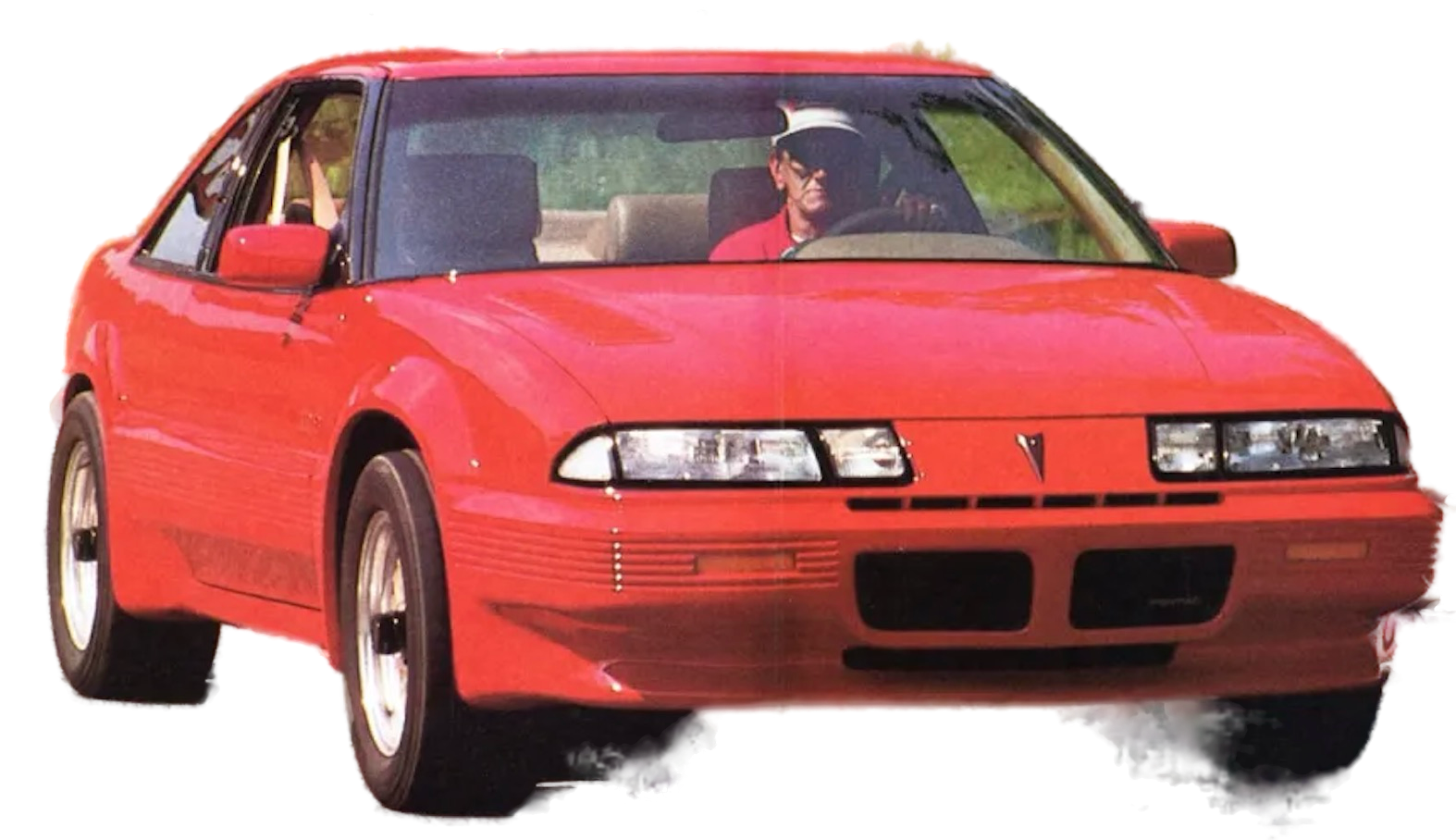
The Grand Illusion is easy to dismiss as another exaggerated late-1980s show car. Period documentation tells a different story. Pontiac’s turbo Grand Prix concept was fully specified, independently tested and presented as a package that had a legitimate chance of influencing production.
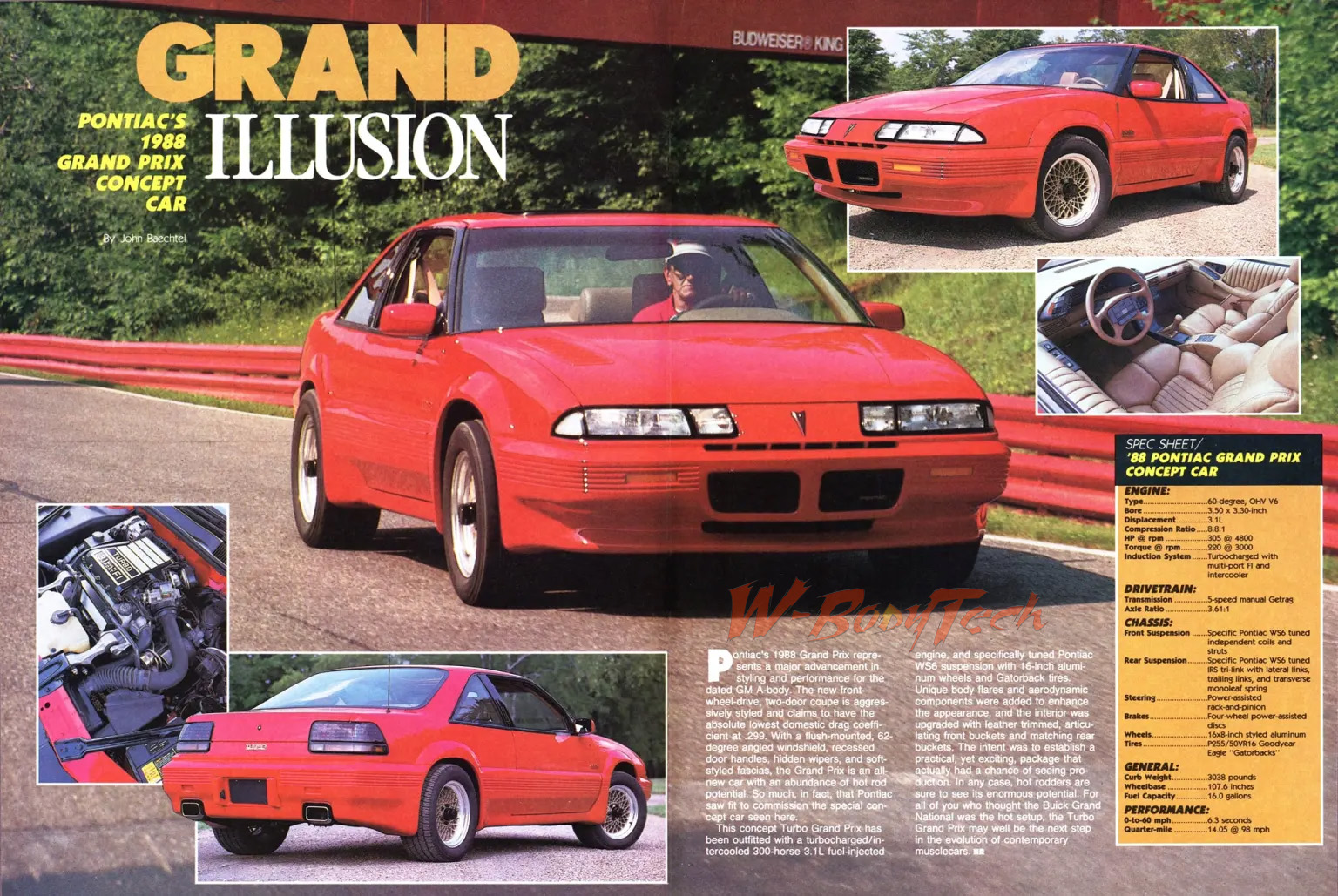
The most important surviving source is the November 1987 issue of HOT ROD. Its feature on the car did more than publish styling photography. It documented the engine, transmission, suspension, brakes, tires, curb weight and measured performance. Those figures make the Grand Illusion one of the clearest early demonstrations of how aggressively Pontiac was considering the new front-wheel-drive W-body as a performance platform.
The Grand Prix changes completely
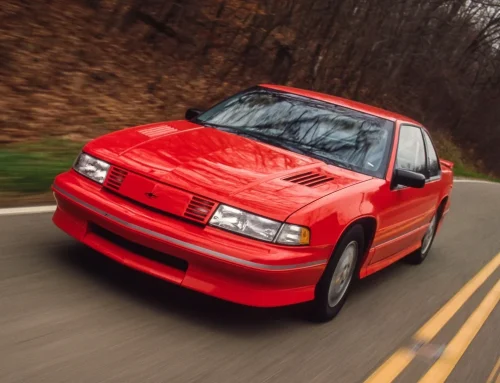
The production 1988 Grand Prix was not an evolution of the rear-wheel-drive car it replaced. It was part of GM’s new GM10/W-body program, sharing its basic front-drive architecture with the Buick Regal and Oldsmobile Cutlass Supreme while receiving its own Pontiac body, cabin and chassis tuning.
Aerodynamics were central to the production car. Contemporary Car and Driver reporting cited a drag coefficient of 0.287 for the base Grand Prix, while the sportier SE still remained below 0.30. The design used a steeply raked windshield, recessed door handles, hidden windshield wipers and closely integrated fascias rather than the upright proportions of the previous generation.
The redesign was significant enough to win MotorTrend’s 1988 Car of the Year award. But the normal production Grand Prix still launched with a naturally aspirated 2.8-liter V6 making roughly 130 horsepower. Pontiac’s concept program showed how much farther the same basic platform could be pushed.

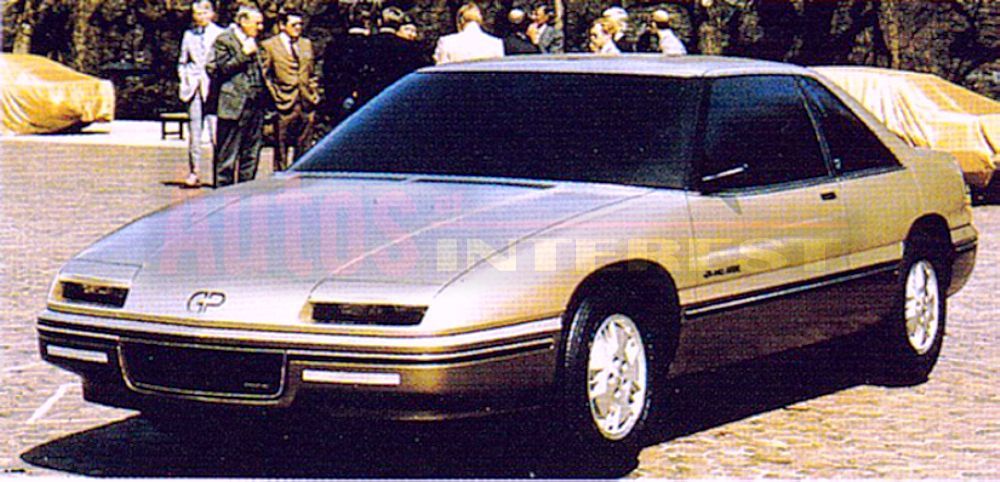
Grand Illusion was more than an appearance exercise
HOT ROD introduced the special car under the headline “Grand Illusion” in its November 1987 issue, before the new 1988 Grand Prix had become a familiar sight on American roads. The magazine described the car as a special Pontiac-commissioned concept intended to establish a practical but exciting package with a real chance of influencing production.
That wording matters. The car was not simply a fiberglass show shell with an impossible specification sheet. It used the new Grand Prix’s underlying architecture, carried a running turbocharged drivetrain and was subjected to performance testing.
305 horsepower from 3.1 liters
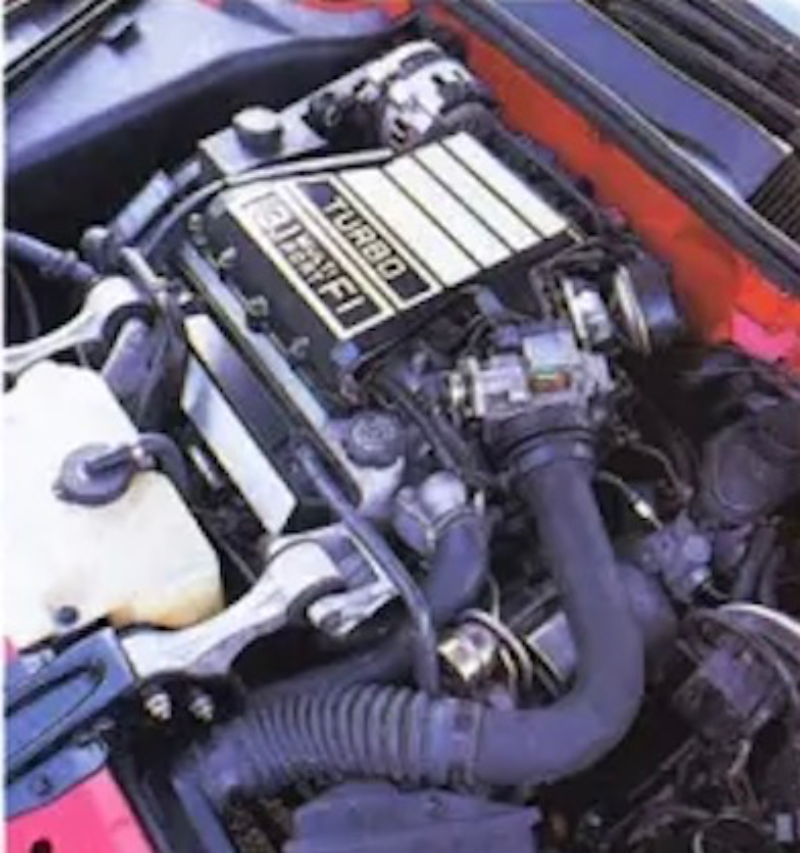
The concept’s headline number was not merely “around 300 horsepower.” The period specification listed 305 horsepower at 4,800 rpm from a 3.1-liter, 60-degree OHV V6 using multi-port fuel injection, turbocharging and an intercooler.
Published torque was 220 lb-ft at 3,000 rpm. That figure looks surprisingly modest beside the horsepower rating, but it is the number printed in the original specification and is retained here rather than “corrected” from later assumptions.
The engine used a 3.50-inch bore, 3.30-inch stroke and an 8.8:1 compression ratio. The 3.1-liter displacement was itself significant because the ordinary 1988 Grand Prix still used the smaller 2.8-liter V6. Pontiac was therefore showing both added displacement and forced induction before the mainstream Grand Prix range fully transitioned to the 3.1-liter engine.
Period engine specification
Displacement3.1 liters
Bore x stroke3.50 x 3.30 inches
Compression8.8:1
InductionTurbocharged, multi-port fuel injection and intercooler
Horsepower305 hp at 4,800 rpm
Torque220 lb-ft at 3,000 rpm
The rest of the car was built to match the engine
The original article did not treat the turbo engine as an isolated experiment. Pontiac fitted specific WS6 suspension tuning at both ends of the car. Up front were independent coils and struts. At the rear, the W-body used its independent tri-link arrangement with lateral links, trailing links and the transverse composite monoleaf spring characteristic of early versions of the platform.
Five-speed manual
The period HOT ROD specification identifies a five-speed manual Getrag and a 3.61:1 axle ratio. Later enthusiast retellings sometimes conflict on the prototype transaxle, so this article follows the contemporary published source.
Four-wheel disc brakes
The specification lists four-wheel power-assisted disc brakes. The older version of this article suggested the car “likely” had ABS. No supporting period specification was found for that claim, so it has been removed.
16 x 8 wheels
Styled 16 x 8-inch aluminum wheels gave the concept substantially more tire under it than an ordinary late-1980s midsize front-driver.
255-width Gatorbacks
P255/50VR16 Goodyear Eagle “Gatorback” tires were specified, an unusually aggressive size for a front-wheel-drive production-based concept of the period.
| Specification | Grand Illusion | Why it matters |
|---|---|---|
| Transmission | 5-speed manual Getrag | The production Turbo Grand Prix would instead use an automatic. |
| Axle ratio | 3.61:1 | A performance-oriented final-drive specification for the prototype. |
| Front suspension | Specific Pontiac WS6 tuned independent coils and struts | Shows Pontiac was developing the chassis with the added power in mind. |
| Rear suspension | WS6-tuned independent tri-link / transverse monoleaf | Retained the early W-body rear architecture with specific tuning. |
| Brakes | Four-wheel power-assisted discs | No unsupported ABS claim is needed. |
| Wheels | 16 x 8-inch aluminum | Much wider than ordinary family-car fitments of the era. |
| Tires | P255/50VR16 Goodyear Eagle Gatorback | Serious period performance rubber. |
The numbers put it in another class
At a published curb weight of 3,038 pounds, the concept’s 305 horsepower produced a power-to-weight ratio far removed from the 130-hp production Grand Prix. HOT ROD listed 0-60 mph in 6.3 seconds and a 14.05-second quarter mile at 98 mph.
Those numbers should be read as period results for the specific prototype, not as production promises. Even so, they are valuable because they confirm that the Grand Illusion was more than a styling mock-up with an ambitious engine rating.
Context: Pontiac was demonstrating this level of front-drive W-body performance while the showroom 1988 Grand Prix was still establishing itself as a new platform. The concept effectively skipped ahead to the sort of performance program that would begin reaching customers a year later.
Performance without turning it into a race car
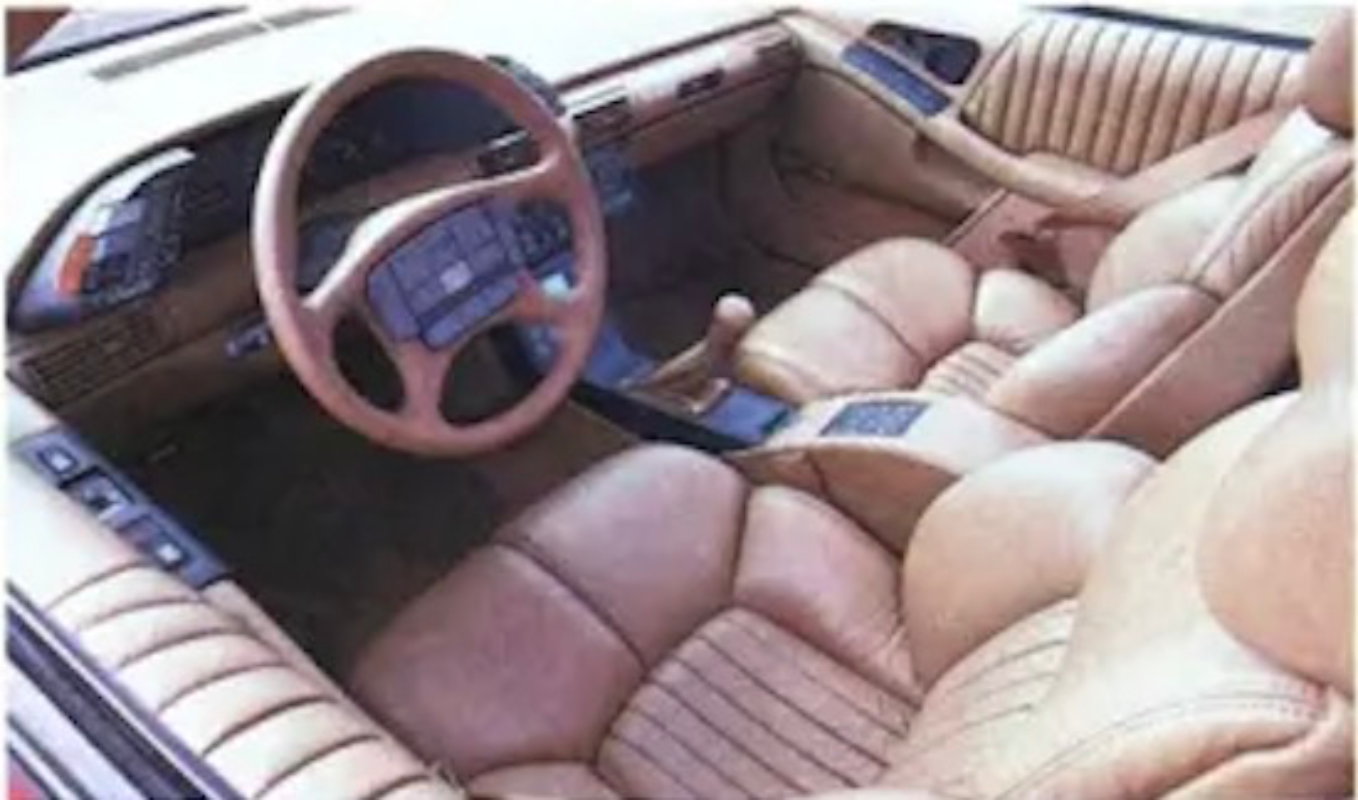
Pontiac kept the Grand Prix’s technology-heavy, driver-oriented interior philosophy rather than stripping the car down to chase a number. The period feature specifically called out leather-trimmed articulating front bucket seats and matching rear buckets.
That choice reinforces the concept’s purpose. Pontiac was not proposing a barely streetable special. It was exploring whether the new Grand Prix could combine high performance with the equipment, seating and visual drama expected from the nameplate.
From Grand Illusion to the ASC/McLaren Turbo Grand Prix
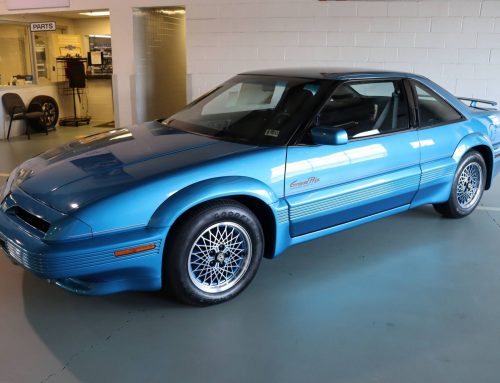
The production car that followed was not a direct copy of the 305-hp concept, but the family resemblance is impossible to miss. Pontiac’s limited-production Turbo Grand Prix arrived for 1989 and continued for 1990 with engineering and specialty-vehicle work involving ASC and McLaren Engines.
The production drivetrain centered on the LG5 turbocharged and intercooled 3.1-liter 60-degree V6. Factory output was 205 horsepower, with period sources commonly listing torque in the 220-225 lb-ft range. A Garrett T25 turbocharger, intercooling and application-specific internal and cooling-system changes made it substantially more than a stock 3.1 with a turbo bolted on.
The five-speed manual from the Grand Illusion did not make the transition. Production Turbo Grand Prix models used a heavy-duty 4T60 automatic with drivetrain-specific calibration and final-drive hardware. For 1990, Pontiac also offered the turbocharged drivetrain in the four-door Grand Prix STE Turbo, extending the program beyond the coupe.

Production-count caution: Published Turbo Grand Prix totals vary between enthusiast registries, historical summaries and secondary sources. Rather than repeat one disputed number as settled fact, W-BodyTech treats the TGP as a documented limited-production 1989-1990 specialty model and points owners toward the active community registries for VIN-level research.
What survived, and what changed
| Area | 1988 Grand Illusion concept | 1989-1990 Turbo Grand Prix |
|---|---|---|
| Engine | Turbo/intercooled 3.1L OHV V6 | LG5 turbo/intercooled 3.1L OHV V6 |
| Output | 305 hp @ 4,800 rpm | 205 hp |
| Torque | 220 lb-ft @ 3,000 rpm | Published figures generally 220-225 lb-ft |
| Transmission | 5-speed manual Getrag | Heavy-duty 4T60 4-speed automatic |
| Chassis | Specific WS6 tuning | Production performance suspension and TGP-specific package tuning |
| Wheels/tires | 16×8, P255/50VR16 Gatorbacks | Unique 16-inch cross-lace wheel/tire package |
| Body | Concept aero treatment and flares | Production-specific fascias, flares, cladding and functional hood louvers |
| Role | Running performance concept | Limited-production specialty model |
The largest retreat was power. The production car gave up roughly 100 horsepower compared with the concept and lost the manual transmission. But it retained the more important idea: Pontiac could sell a turbocharged, intercooled, specialized W-body Grand Prix developed beyond the standard production car.
The TGP community is still documenting these cars
Rare specialty cars are often documented as much by owners as by surviving factory literature. That is especially true for the Turbo Grand Prix, where production totals, running changes, drivetrain details, VIN records and restoration knowledge have been debated and collected for decades.
ASC/McLaren Grand Prix Facebook community
For owners researching an original Turbo Grand Prix, the dedicated ASC/McLaren Grand Prix community is one of the most useful places to compare cars, restoration details, historical material and surviving examples.
W-BodyTech also maintains technical reference material for the drivetrain, including the GM 4T60-HD transmission guide and the broader 1988-1996 Pontiac Grand Prix reference.
Why the Grand Illusion matters
The most interesting thing about the Grand Illusion is not that Pontiac once built a 305-hp front-wheel-drive concept. It is that the concept appeared at the very beginning of the W-body story and already contained the outline of a real production program.
The showroom Turbo Grand Prix was slower, automatic-only and substantially less powerful, but it proved the concept’s central point. The W platform could support a genuine specialty performance model with unique forced induction, cooling, transmission, suspension and bodywork rather than relying only on badges and appearance packages.
It also changes how the first-generation Grand Prix should be remembered. The 1988 car is often discussed mainly as GM’s new aerodynamic front-drive coupe and MotorTrend Car of the Year. The Grand Illusion shows that Pontiac was simultaneously investigating a much more ambitious performance path.
In that sense, the “illusion” was not the car itself. Most of the idea became real. What disappeared was the most extreme version of it: 305 horsepower, a manual gearbox and the kind of power-to-weight ratio that would have made the first W-body Grand Prix one of the most unexpected American performance cars of the late 1980s.
Sources and further reading
This update separates period-documented specifications from later enthusiast recollections. Where secondary sources disagree, the article either follows the contemporary source or flags the uncertainty instead of presenting a disputed detail as fact.
- HOT ROD — Pontiac’s 1988 Grand Prix Concept Car / “Grand Illusion”. Originally published November 1987; primary period source for the concept’s specifications and performance.
- MotorTrend — Car of the Year winners. Confirms the Pontiac Grand Prix as the 1988 Car of the Year.
- Car and Driver — 1988 Pontiac Grand Prix SE archive test. Period context for the production Grand Prix’s aerodynamics, styling and launch-era performance.
- Hemmings — 1989-1990 Pontiac Turbo Grand Prix. Historical overview of the ASC/McLaren production program and 205-hp turbocharged 3.1L drivetrain.
- Car and Driver — 1989 Pontiac Turbo Grand Prix ASC/McLaren. Independent modern overview of the specialty production car.
- NHTSA — ASC Turbo Grand Prix / Turbo STE production treatment. Government correspondence confirming ASC production of Turbo Grand Prix and Grand Prix STE Turbo vehicles during the 1989-1990 period.
- W-BodyTech — GM 4T60-HD transmission guide. Technical context for the production Turbo Grand Prix’s heavy-duty automatic transaxle.
- ASC/McLaren Grand Prix Facebook Group. Active owner community for TGP restoration, history and vehicle-specific research.
- ASC/McLaren Grand Prix Facebook Page. Public community page focused on the model.
The existing W-BodyTech images have been retained as requested. Captions have been rewritten to avoid assigning unsupported technical details to an image where the surviving photo alone cannot prove them.
Help preserve Turbo Grand Prix history
Own a Turbo Grand Prix, Turbo STE or original documentation from the ASC/McLaren program? Share VIN data, factory literature, restoration details and corrections with the W-BodyTech community so the history remains useful to the next owner.
Discover more from W-BodyTech
Subscribe to get the latest posts sent to your email.